Get Free Quote
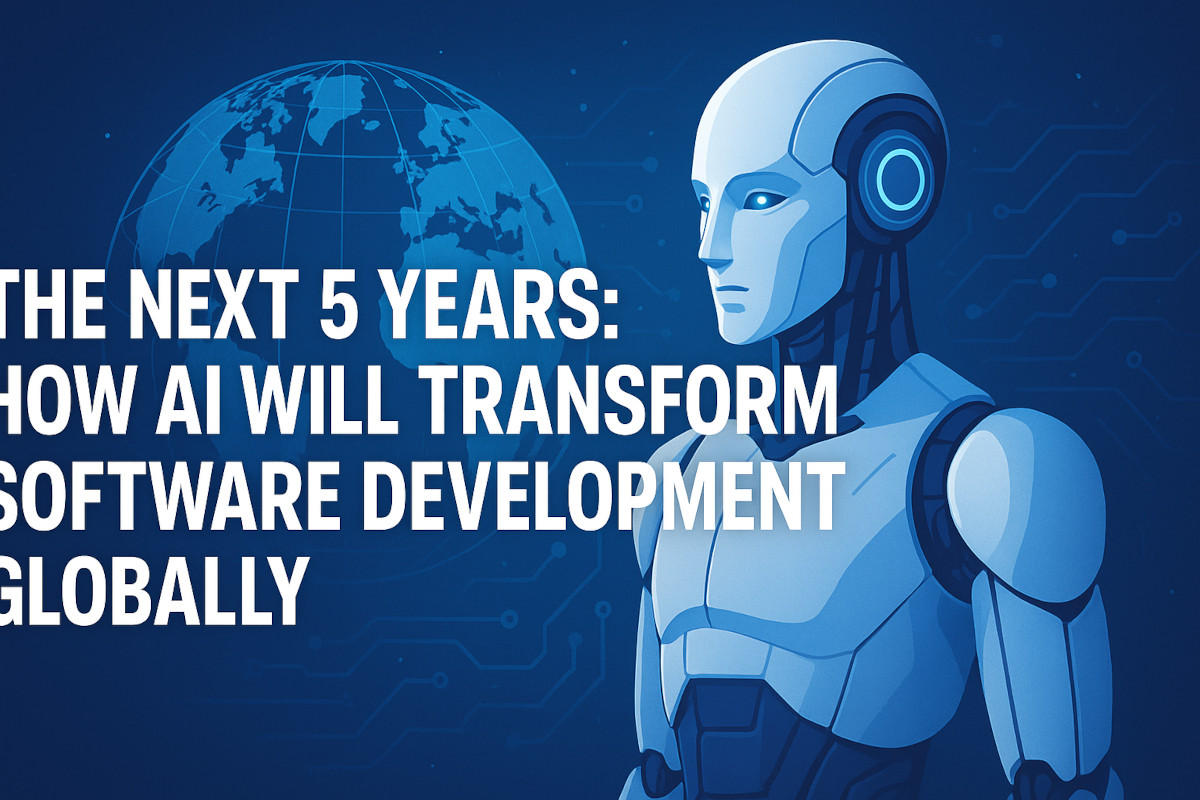
The Next 5 Years: How AI Will Transform Software Development Globally
Artificial intelligence is rapidly reshaping the software development landscape, and the next 1–5 years promise even more profound changes. Developers across the world are already using AI-powered tools – from coding assistants like GitHub Copilot and Amazon CodeWhisperer to conversational AI like OpenAI’s ChatGPT and Anthropic’s Claude – to write and review code faster than ever. In fact, a recent GitLab survey found 83% of developers consider AI integration essential in their development process. Tech research firm Gartner predicts that by 2027 half of all developers will be using AI-powered coding tools as part of their daily work. This article explores how these AI tools are revolutionizing the way software is built, what this means for developer careers and team workflows, and how developers worldwide can prepare for this shift. We’ll also examine key skills to remain competitive and the new roles and opportunities emerging in an AI-driven industry. The goal is to provide a global perspective on the AI revolution in software development – and practical guidance for thriving in this new era.
AI Tools Reshaping the Development Landscape
AI has rapidly become a co-pilot in every developer’s toolkit, automating tedious tasks and accelerating the entire development lifecycle. Modern IDEs now ship with AI pair-programmers built in, offering intelligent code completions and even generating entire functions on demand. Over one million developers are actively using GitHub Copilot as an AI assistant, treating it as a “new building block” of development – as fundamental as an IDE itself. Tools like Copilot, Amazon CodeWhisperer, Tabnine, and Replit Ghostwriter (powered by large language models trained on vast codebases) can transform a simple comment or function name into a block of working code. This means that instead of hand-crafting boilerplate logic, developers can get the skeleton of a feature in seconds and focus on the more complex logic and design.
The impact on productivity has been dramatic. Research quantified by McKinsey found that developers using AI assistants can complete certain coding tasks 20–50% faster on average. GitHub’s own studies similarly reported eye-opening gains – one experiment showed developers finished tasks 55% faster with AI help. Even a 20% boost equates to reclaiming an entire workday each week. These productivity gains stem from eliminating many “flow breakers” in programming. Instead of constantly searching documentation or Stack Overflow for solutions, developers can ask an AI and get instant answers or code snippets. Routine code that might take hours to write can be generated in minutes, enabling rapid prototyping and iteration. It’s not just about speed; offloading repetitive work to AI also reduces mental fatigue, so human developers have more energy for creative problem-solving.
AI is making its presence felt at every stage of development. In the coding phase, as we saw, generative AI helps write code. But AI is also assisting in code review and quality assurance. For example, AI-based code review tools can scan a pull request and flag potential bugs, security vulnerabilities, or style issues, acting as an automated second pair of eyes. GitHub has even introduced an AI that auto-generates pull request descriptions and suggests improvements in code changes. Testing and debugging are likewise being transformed: AI can auto-generate unit tests by analyzing code logic, ensuring edge cases aren’t missed. When a test fails or an error occurs, developers are increasingly turning to AI assistants (even general ones like ChatGPT) to diagnose the root cause – the AI can parse stack traces or logs and propose likely fixes. This reduces time spent combing through error messages. AI tools are also writing documentation: models like OpenAI’s Codex can explain code in plain English, helping keep docs up-to-date and easing onboarding for new team members. In DevOps, AI is optimizing build pipelines and cloud operations – predicting which tests might fail, automating environment setup, and even breaking down user stories or task estimates from natural language requirements. From initial design to deployment, AI is now an integrated co-creator throughout the software lifecycle.
Perhaps one of the most profound shifts is that AI acts like a virtual team member available 24/7. Developers can essentially pair-program with an AI that never sleeps, tapping into a vast corpus of programming knowledge instantly. This round-the-clock availability is especially beneficial for globally distributed teams or lone developers coding at odd hours – you always have a “colleague” ready to help. The key, of course, is using these tools wisely: human oversight remains critical. Successful teams treat AI suggestions as drafts, not final code, and developers still guide the process and verify the output. When well-integrated, AI tools are accelerating development in ways comparable to past leaps like open-source libraries or cloud services – and they’re rapidly becoming as commonplace and indispensable as version control.
Productivity, Workflows, and Team Dynamics in the AI Era
With AI taking on grunt work, developer workflows are evolving to be more efficient and more collaborative in new ways. As noted, individual productivity is surging – developers are delivering more in less time, which can compress release cycles. A majority of engineers report feeling more productive and able to focus on higher-level work when using AI coding tools. For instance, rather than spending an afternoon writing boilerplate or scanning API docs, an engineer might generate that code in minutes and use the freed time to refine system architecture or tackle complex algorithmic problems. In one survey, over 70% of developers said AI coding tools give them an advantage at work, and 83% consider AI essential to their workflow going forward. The extra time isn’t just going into more coding – it’s being reallocated to planning, learning, and collaboration. In GitHub’s 2024 global survey, developers most commonly said they use the time saved by AI to design better systems, collaborate with teammates, and learn new skills. Nearly half of respondents in the US and Germany, for example, reported investing AI-freed time into system design and team coordination. This indicates that AI is helping shift developer focus to more strategic and creative aspects of software creation – a trend observed worldwide.
Team dynamics are also changing in this AI-assisted environment. On one hand, AI makes individual developers more self-sufficient. If you can ask an AI to explain a bug or generate a quick function, you might not need to interrupt a colleague for help on minor issues. Senior developers, who often field many questions from juniors, can be relieved of answering the same basic queries repeatedly. In this sense, an AI assistant can act like an eager junior team member who is always available to pair program or do an initial code review pass. Remote and asynchronous teams benefit greatly – even if your human teammates are offline, the AI is ready to assist at any time. On the other hand, new forms of collaboration are emerging around AI usage. Teams are beginning to establish guidelines for how and when to use AI in coding. For example, some organizations require that if you insert AI-generated code, you must label it and write tests for it, or they set rules on using AI for sensitive code sections. There’s also a growing culture of prompt sharing – developers trade effective AI prompts and tips much like they would share code snippets or best practices, effectively learning collectively how to get the most from these tools. Rather than replacing human collaboration, AI can actually enhance it: by automating the drudgery, it frees developers to spend more time on design discussions, code reviews, and creative brainstorming with their peers.
Importantly, code quality and team output still depend on human judgment in this AI era. Early experiences show that AI suggestions range from brilliant to buggy – they require a critical eye. This is where seasoned developers come in. Industry experts have observed that AI tools tend to amplify the productivity of experienced developers, while less experienced devs can struggle if they rely on AI uncritically. A senior engineer knows when to accept an AI-generated solution and when to question or tweak it, whereas a junior may not have the intuition to spot subtle flaws. Without proper guidance, a novice might blindly trust AI output and introduce errors. Thus, team workflows are adapting to include a “human in the loop” for AI-generated code – code reviews and testing take on even greater importance to catch mistakes an AI may introduce. Some teams formalize this by having peers review any AI-written code or by using AI-powered code analysis followed by human verification, essentially layering quality checks. The net effect is that the development process becomes more about oversight, integration, and rapid iteration: you let the AI handle the first draft of code or tests, and then the team refines and integrates that output into the product. Many developers describe their new role as being a “code curator” or editor, rather than just a code typist. You might write less boilerplate, but you spend more time reviewing, testing, and orchestrating the overall solution. In essence, software engineering is shifting toward a human-AI collaboration model, where the AI accelerates execution and humans ensure correctness, creativity, and alignment with user needs.
From a global perspective, these workflow changes are being felt in every major software hub. AI coding assistants are nearly universal among developers in countries like the US, India, Brazil, and Germany – a 2024 survey found over 97% of developers across these regions have used AI coding tools at work. This ubiquity means best practices for human-AI collaboration are spreading worldwide. However, adoption is not without challenges: organizational support for AI varies by region. For example, in the same survey, 88% of U.S. developers said their companies at least allow or encourage AI tool use, while in Germany that figure was lower, around 59% (likely due to stricter data regulations and caution in adopting new tech). Despite these differences, the overall direction is clear – teams globally are embracing AI to boost productivity, improve code quality, and modernize their software practices. Developers are reporting benefits like writing more secure code, catching bugs earlier, onboarding to new codebases faster, and even learning new programming languages more easily with AI assistance. In short, AI is becoming a catalyst for better workflows – automating the tedious parts, augmenting human capabilities, and allowing teams to deliver higher-quality software more efficiently.
The Impact on Jobs: Will AI Replace Developers?
One of the biggest questions on every developer’s mind is what these advances mean for software development careers. As AI writes more code, will we still need human programmers? It’s a complex question, but most evidence suggests that AI is more of a tool than a replacement – at least for the foreseeable future. That said, the nature of software development jobs is undeniably evolving, and developers are right to wonder how to stay relevant.
It’s important to acknowledge the anxieties before looking at the opportunities. Some experts have made bold predictions: researchers at Oak Ridge National Laboratory, for instance, have suggested that by 2040, machines (AI systems) could write most of their own code, potentially obviating a lot of human coding work. And in a recent Evans Data Corporation survey of software professionals, nearly 30% of developers feared that AI might render their current development efforts obsolete in the foreseeable future. These kinds of predictions grab headlines and reflect genuine concern among developers that parts of their job may be automated away. We’re already seeing early signs – one AI system can generate a basic app from a description, another can fix simple bugs automatically. It’s true that AI is encroaching on tasks that used to require a human, especially routine coding and maintenance tasks.
However, taking a 1–5 year view, the consensus is that human developers will very much still be needed, though their roles will shift significantly. “AI won’t replace software engineers, but an engineer using AI will replace an engineer who doesn’t,” as the saying goes. In other words, those who adapt and leverage AI will outperform those who stick to purely manual methods. Forward-looking organizations are treating AI as a force multiplier for developers, not a substitute. McKinsey analysts estimate that even as AI automates some programming tasks, up to 80% of a developer’s job will remain human-centric in the coming years. Writing code is only one part of software engineering – there’s also problem decomposition, requirement analysis, system design, user experience considerations, and the creative brainstorming of new features. AI is not (yet) good at those higher-level cognitive tasks, especially when it comes to understanding nuanced customer needs or coming up with truly novel solutions. Software engineering isn’t just typing code; it’s deciding what to build and how it should behave – realms where human insight is still indispensable.
In fact, many industry leaders argue that AI makes experienced developers even more valuable. As mentioned earlier, AI can generate a first draft of code, but it often takes an experienced engineer to review and refine that draft into production-quality software. Senior developers are becoming the guides and orchestrators for AI, steering it to produce useful output and filtering out the nonsense. Far from making them obsolete, AI is amplifying their impact – one senior developer armed with AI assistants can oversee and produce far more than they could alone. This increases demand for those with strong expertise. “We still need humans in the loop,” one LinkedIn tech author writes, “but the nature of some jobs is indeed evolving”. Entry-level coders may find that the simplest parts of their job (like writing basic CRUD functions or boilerplate) are now done by AI. But new opportunities open up for them to learn from AI and focus on more complex tasks earlier in their career. Junior devs might use AI as a tutor to get up to speed on unfamiliar languages or frameworks, for example, accelerating their learning curve. The key challenge is that they must also develop good judgment – knowing when to trust AI and when to be skeptical – which historically comes with experience. Mentorship and training will need to adapt so that less-experienced developers learn to work effectively with AI and not become overly reliant on it.
The value of uniquely human skills is actually rising in this AI-infused job landscape. Creativity, architectural design, and critical thinking are at a premium. As Janel Garvin, CEO of Evans Data Corp, aptly put it: “AI will not replace programmers but will fundamentally change the development landscape, making human creativity and problem-solving essential.” Similarly, Grady Booch, a renowned software engineer, noted that being a programmer in the age of AI will require developing new skills and working in new ways, even though the profession isn’t going away. We can expect some job roles to be redefined: instead of a “Java programmer” cranking out boilerplate, you might be a “software solution designer” who uses AI to implement ideas. Some traditional coding roles might shift into more analytical or supervisory positions (for example, a QA engineer might spend less time writing test scripts and more time training AI to run tests and then analyzing the results). But wholesale job losses in development are not expected in the near term. In fact, the demand for software talent remains robust – especially talent that knows how to integrate AI into the development process. Many companies are actively hiring developers with AI/ML experience. A report from Indeed noted that the most in-demand AI-related jobs include software engineers (with AI skills), data scientists, and machine learning engineers – and demand for these roles has more than doubled over the past three years. In short, AI is changing what software developers do day-to-day, but it’s also creating new needs and opportunities. Developers who embrace AI are likely to find more interesting, higher-level work to do, not less work overall. Those who refuse to adapt, however, risk finding their old skill set becoming less valued. The coming years will be a period of adjustment, but it’s one in which human developers remain at the center – if they play their cards right.
Preparing Developers for an AI-Powered Future
Given these shifts, how can developers at all levels prepare and stay ahead of the curve? Whether you’re just starting your career or you’re a seasoned engineer, the advent of AI in software development means it’s time to evolve your skill set and mindset. Here are some practical recommendations for thriving in this new environment:
- Embrace AI as a Partner (Not a Threat): The first step is attitude. Treat AI tools as collaborative partners that can make you more productive, rather than as enemies. Get hands-on experience with popular AI dev tools – try coding a side project with GitHub Copilot or ask ChatGPT to help explain a tricky piece of code. The more comfortable you are using AI, the more you can leverage it. Remember, an engineer who knows how to use AI will have an edge over one who doesn’t. So, dive in and experiment. Make AI a natural part of your daily workflow for tasks like code completion, generating test cases, or researching solutions. By understanding its strengths and limitations through practice, you’ll learn how to delegate routine work to AI while honing the skills that AI can’t replicate.
- Don’t Skip the Fundamentals: While AI can write code, it’s only as good as the prompt and guidance you give it. To effectively supervise AI, you still need solid grounding in programming fundamentals, algorithms, and system design. Junior developers especially should focus on learning core computer science concepts and best practices. Think of AI outputs as open-book exam answers – if you don’t already know the material, you won’t spot when the answer is wrong. So continue building your knowledge of data structures, architecture, and frameworks. Paradoxically, AI can help you learn these faster (by explaining code, for example), but you must invest the effort to learn. In an AI-driven workflow, a strong foundation is what enables you to verify AI’s work and improve upon it. In short, use AI to learn, but don’t let it become a crutch – ensure you could do critical tasks without it if needed.
- Practice “AI-Augmented” Development: Make a habit of using AI during development in a disciplined way. For example, when writing code, write a comment describing the function you need and let the AI suggest an implementation – then review and test that code thoroughly. This trains you to write clear specifications (a useful skill in itself) and to critically evaluate AI output. When debugging, see if the AI’s explanation aligns with your own reasoning. Over time, you’ll develop an intuition for when the AI is likely correct and when it’s off base. Senior developers can lead by example here: show your team how to incorporate AI into coding sessions (perhaps even do occasional pair programming where one person writes tests or higher-level scaffolding while the AI writes the implementation). Also, work on prompt crafting – learning how to phrase questions or commands to get the best results from an AI. For instance, providing context in your prompt or asking for step-by-step reasoning can lead to better outputs. Treat this as the new “Google-fu” – a skill to master over time. Teams might consider sharing successful prompts with each other, building an internal knowledge base of AI usage tips.
- Contribute to AI Policies and Best Practices: In a team setting, take initiative in shaping how AI is used. This could mean drafting guidelines for code reviews of AI-generated code, setting up automated checks for licensing or security issues in AI-suggested snippets, or deciding on rules for when to consult a teammate versus an AI. By getting involved in these conversations, you not only help ensure responsible use of AI, but you also become a go-to person for AI tooling – boosting your value to the organization. Encourage a culture of open discussion about AI mistakes: if an AI-generated code snippet caused a bug, treat it as a learning opportunity for the whole team (“What can we learn about writing better prompts or tests to avoid this next time?”). The more proactive you are, the more you position yourself as a leader in the AI-integrated development process.
- Lifelong Learning Mindset: Perhaps the most important preparation is embracing continuous learning. The tech industry changes fast, and AI is accelerating that pace. Developers must be willing to constantly update their skills. Be curious about how AI and machine learning work under the hood – you don’t need to become a data scientist, but understanding the basics of model training, prompt tuning, and AI capabilities will demystify the tools you use. This might involve taking online courses on machine learning fundamentals, or just experimenting with building a simple model. Likewise, stay informed about new AI features being added to your development tools, and seek out blogs or community forums where developers discuss their AI workflows. Adaptability is now a core developer skill. As one World Economic Forum report highlighted, by 2030 around 70% of the skills used in jobs will change due to AI and other forces. In practice, this means the best developers treat learning as part of the job description – continuously exploring new languages, tools, and methodologies. Those who cultivate this mindset will find it easier to incorporate AI advances, whereas those who coast on old knowledge may fall behind. Make a plan to periodically upskill yourself: for example, set aside a couple hours each week for learning – whether it’s reading about a new AI API, playing with a devops automation tool, or improving your understanding of a business domain your software serves.
Key Skills for the AI Age
To remain competitive and relevant in an AI-driven development world, developers should focus on building a mix of technical and soft skills. Technical skills will help you work with AI, while human-centric skills will ensure you bring something to the table that AI cannot easily replicate. Below are some of the key skills and knowledge areas to prioritize:
- AI and Machine Learning Fundamentals: Understanding the basics of machine learning (ML) and AI will be invaluable. You don’t necessarily need to become an ML engineer, but you should know how AI models work, what their limitations are, and how they can be applied in software. Learn about topics like model training, datasets, bias, and evaluation. Familiarize yourself with common ML libraries or platforms. Software developers on AI projects benefit from knowledge of math, statistics, data science, and ML algorithms. In practice, this might mean learning Python’s ML ecosystem (TensorFlow, PyTorch, scikit-learn) or understanding how to call AI model APIs. Knowing ML fundamentals will also help you integrate AI services (like computer vision or NLP APIs) into your applications – a common task as many products become “AI-enabled.”
- Prompt Engineering and LLM Utilization: As developers increasingly work with large language models (LLMs) for code and documentation, skill in prompt engineering becomes important. This means learning how to communicate effectively with AI models – crafting clear prompts, providing proper context, and using techniques like few-shot examples to get the best results. While “prompt engineer” might not remain a distinct job title forever (many companies expect regular developers to handle it), the skill itself is valuable for developers. It can dramatically improve the quality of AI-generated output. Practice by experimenting with different prompt styles and noting how the model responds. Additionally, learn to use advanced features of AI assistants: for example, instruct the AI to explain its code, or to suggest alternatives – essentially, learn to drive the AI rather than passively receive from it. In the next few years, being fluent in interacting with AI will be as important as being fluent in a programming language.
- Data Proficiency (Data Analytics & MLOps): Data is the fuel of AI. Developers should sharpen their ability to work with data – from using SQL and data analysis tools to understanding data cleaning and transformation. Even in traditional software projects, an AI-enhanced world means you’ll likely deal with data more often (for instance, analyzing user behavior data with AI, or preparing training data for a custom model). Also, knowledge of MLOps (Machine Learning Operations) is a valuable technical skill if you want to work on integrating AI models into software systems. MLOps covers how to deploy, monitor, and maintain ML models in production. Skills here include using cloud AI services, containerizing models with Docker, setting up pipelines for continuous model improvement, etc. As Gartner predicts, by 2027 many software engineering teams will be using intelligent platforms to measure and improve productivity – which implies more ML-driven analytics in the dev process itself. Being comfortable with data and ML tooling will set you apart as someone who can bridge software engineering with AI.
- Deep Expertise in One Domain (and Generalist in Many): Ironically, in an AI age, having domain knowledge becomes even more crucial. AI tools are generic by nature; the differentiator is knowing your specific domain or industry. Whether it’s finance, healthcare, e-commerce, or any niche field – understanding the domain’s challenges means you can ask the right questions and interpret AI outputs correctly. Developers should cultivate domain-specific knowledge relevant to the projects they work on. For example, an AI might generate a solution that is syntactically correct, but only a developer with domain insight will see if it truly meets the user’s needs or regulatory requirements of that field. Alongside domain expertise, aim to be an “expert-generalist.” That is, build a broad base across multiple areas of tech so you can quickly learn whatever becomes important next. In a rapidly changing landscape, the most successful engineers are those who can learn new skills at the speed of change. Think of it this way: AI will keep introducing new tools and abstractions; being a generalist makes it easier to pick them up, and having one or two deep specializations will make you indispensable in those areas.
- Critical Thinking and Problem-Solving: Among the top “soft” skills to hone are analytical thinking and creativity in problem-solving. As more coding is handled by AI, the developer’s role shifts towards deciding what to build, why it’s needed, and how to design a solution. Being able to break down complex problems into solvable pieces is key. Strong problem-solving skills and the ability to think critically are crucial in designing effective solutions – especially ones that involve AI components. This includes evaluating AI outputs critically (e.g. spotting edge cases that an AI might miss) and coming up with creative approaches when the AI falls short. Practice honing these skills by engaging in design discussions, participating in hackathons, or working on open-ended projects where you have to figure out the approach (rather than just implement a given spec). These are the human skills that no machine can easily replicate, and they will set you apart in the age of AI.
- Collaboration and Communication: Surprisingly, as technical as software development is, success often comes down to teamwork and communication – and this will remain true. In fact, with AI handling more rote tasks, human communication becomes even more central: understanding client requirements, discussing trade-offs, and collaborating with stakeholders (like product managers or data scientists). Developers should work on their ability to explain technical concepts clearly, to document decisions, and to coordinate work in a team. Moreover, AI itself introduces new collaboration points: you might be working closely with AI specialists or data teams in your company. For instance, integrating an AI model into an app might involve coordinating with a data scientist or an ML engineer. Effective collaboration across disciplines (and across human/AI boundaries) requires good communication, empathy, and teamwork skills. Also, interdisciplinary collaboration is a growing theme – you may need to work with domain experts (say a healthcare expert for a medical app with AI features) to ensure the solution is correct. Focus on listening, asking good questions, and articulating your ideas. In a global context, this also means being able to work effectively on diverse teams, possibly spread across multiple countries and time zones. Soft skills like communication, adaptability, and cultural awareness will remain key career assets.
- Adaptability and Continuous Learning: We touched on lifelong learning above; it’s worth emphasizing as a skill in itself. The ability to adapt – to new tools, new programming languages, new business realities – is absolutely essential. Those who thrive will be those who are not only unafraid of change, but actually embraceit. Cultivate a habit of regularly stepping outside your comfort zone: try a new programming language for a small project, contribute to an open source project using an unfamiliar framework, or explore a different part of the stack than you usually work on. This builds your “learning muscle.” Employers will highly value developers who can quickly learn “the new thing” as AI continues to evolve the tech landscape. In performance reviews and interviews, you may start getting questions like “How have you learned a new technology recently?” So make sure you have good answers by actually doing it. In summary, stay curious and agile. The mindset of a student – always learning – will serve you well for years to come.
Emerging Roles and Opportunities in an AI-Driven World
As AI takes over more of the traditional coding tasks, it’s simultaneously creating new roles and career paths for software professionals. The software development field isn’t shrinking; it’s expanding. Here are some emerging and evolving roles we’re likely to see (and that developers can aspire to) as AI becomes pervasive:
- AI-Augmented Developer / “Code Curator”: This is essentially the new form of the software developer role itself. Instead of writing every line of code, developers become curators and orchestrators of code – assembling software using AI-generated components and ensuring they meet requirements. Think of it as moving from being a craftsman to a conductor: you guide the AI to create pieces of the solution, then you integrate and refine them. This role requires strong oversight skills, an eye for quality, and the ability to work with the AI. It’s not a separate job title per se, but it’s a transformed developer role that many of us will assume. In practice, these developers spend more time on architecture, integrating APIs (including AI services), and polishing the final product, and less time on mechanical coding. They might also specialize in AI-assisted development techniques – becoming the internal expert on how to get the most out of tools like Copilot or ChatGPT for coding. Experienced developers in this capacity are highly valued because they can leverage AI to multiply the team’s output.
- AI Trainer or Prompt Specialist: As companies deploy AI systems (for coding or other uses), a new need arises for people to “train” and fine-tune these models. AI Trainers are professionals who specialize in improving AI outputs by feeding models the right training data, adjusting parameters, or providing feedback on model performance. In the context of software development, an AI trainer might curate examples of correct code for a particular domain so that an assistant like Copilot produces better results for the team’s codebase. They might also be responsible for updating the AI with new coding guidelines or library updates. The Wall Street Journal notes that “AI trainer” has become one of the hot new job titles companies are seeking. These roles often don’t require writing code from scratch but rather understanding AI behavior and shaping it – a mix of technical and teaching skills. Similarly, a Prompt Specialist (though prompt engineering as a standalone job may fade) could be a person on the team who is exceptionally good at crafting prompts and instructions for AI, creating internal templates or prompt libraries for others to use. Over time, we expect all developers will gain this skill, but in the near term, being an early expert can be a niche to fill.
- AI Integration Engineer / Model Integrator: Many new systems will need to incorporate AI components – whether it’s a machine learning model providing recommendations in an app, or an LLM-based service that interacts with users in natural language. Model Integrators (also called AI Platform Engineers or ML Ops Engineers) are the ones who embed AI models into broader software systems. This role involves understanding both software engineering and the specifics of AI models. It’s about answering questions like: How do we call this AI model from our application? How do we handle its output reliably? How do we deploy it at scale and monitor its performance? Developers moving into this area will need to be comfortable with cloud services, APIs, and possibly frameworks for serving AI (like TensorFlow Serving or PyTorch Live). They also need to consider things like model updates, versioning, and latency. Think of this role as the modern evolution of a systems integrator – but instead of just integrating databases or web services, you’re integrating AI capabilities. As companies race to add AI features to their products, AI integration skills are in high demand. This is a great opportunity for developers who enjoy system design and ops to carve out a specialty. It also naturally overlaps with DevOps and site reliability roles (ensuring the AI is always available, scaling, etc.) and with security (making sure the AI’s use of data is secure and compliant).
- AI-focused Quality Assurance (QA) Engineer: QA isn’t going away – if anything, it’s getting more complex. We’ll see QA engineers who specialize in testing AI-driven features and using AI tools for testing. On one side, AI can generate a lot of tests automatically, which means QA engineers will supervise and direct AI in testing. For example, a QA might configure an AI tool to generate test cases for a new feature and then validate that those test cases truly cover the requirements. They might become AI test trainers, feeding the AI information about the application domain so it can test more intelligently. On the other side, when an AI is part of the software (say, a chatbot feature), QA needs to devise ways to test an AI’s output, which can be non-deterministic. This is a new challenge: how do you reliably test something that can respond in many ways? It requires creativity – for instance, crafting a large set of input scenarios and expected tolerance ranges for outputs. QA roles will expand to include validating AI behavior and ethics (ensuring the AI doesn’t produce harmful or biased outputs). We may even see titles like “AI Quality Specialist” whose job is to constantly evaluate and improve the outputs of generative AI systems in production. This role is great for testers who are analytical and enjoy working with both code and data.
- AI Data Specialist: As noted, data is crucial for AI. This role focuses on handling the data that powers AI features. It could mean someone who collects and preprocesses data for model training, manages data pipelines, or ensures data quality and privacy. The AI Data Specialist might sit between software engineering and data science – understanding the application’s needs and making sure the AI has the data it requires. According to recent job trend analyses, roles like “AI data specialist” are emerging as companies realize the importance of proper data for their AI initiatives. For developers, transitioning into a data-focused role can be rewarding if you enjoy working with databases, analytics, and big data tools. You’d be the go-to person for questions like “What data do we have? What can we use to improve our AI’s performance? How do we safely use production data to feed the models?” This is somewhat related to the existing Data Engineer role but with a sharper focus on AI model data needs.
- AI Product Manager / AI Consultant: Not every opportunity is purely technical. Developers with a knack for the big picture might move toward product and strategy roles that leverage their tech background. An AI Product Manager is someone who understands AI capabilities and steers the direction of a product to intelligently include AI features that deliver business value. They need to grasp what AI can and can’t do, and translate that into product strategy. This role is growing as companies embed AI into everything from customer service to business analytics. Having a software development background is a huge plus for an AI product manager because you can better communicate with the engineering team and avoid overhyping (or underestimating) what the AI feature requires. Similarly, AI Consultant or “AI Solutions Architect” roles are springing up – these are experts who advise businesses on how to implement AI, often bridging between technical teams and business stakeholders. If you’re someone who enjoys problem-solving at a systems level and explaining tech to non-tech people, this could be a path to explore in the coming years.
- User Experience (UX) and Human-Centered Roles: Interestingly, as code becomes easier to generate, design and user experience take on even greater importance. Some developers may find themselves shifting towards roles that focus on how humans interact with software. For instance, a UX Engineer who prototypes interfaces might use AI to do the coding, but their skill in crafting an intuitive user experience is the main value. Also, we might see new roles like Conversation Designer or AI Interaction Designer – people who design how users interact with AI-driven systems (like the flow of a chatbot conversation, or how an AI-assisted feature presents suggestions to the user). These roles require a mix of coding, design sense, and understanding human psychology. Developers with a creative streak or interest in frontend/UX could find these emerging opportunities exciting. As AI handles more backend logic, frontend and UX work – the parts that directly touch the user – become relatively more important to get right (since that’s where human creativity and empathy are critical). So investing in design and usability skills could open doors to new hybrid roles at the intersection of development and design.
- AI Ethics and Policy Specialist: While not a traditional developer role, there is a growing need for technical people who also focus on the ethical and regulatory aspects of AI. This could be a career track for developers interested in the policy or compliance side. With regulations on AI use (like data privacy laws, copyright issues for AI-generated code, bias and fairness guidelines, etc.) becoming more prominent worldwide, companies will need experts who ensure their AI implementations are responsible and compliant. A developer in this role would use their technical understanding to audit AI systems, implement fairness checks, or work with legal teams to shape company policy on AI. Given the global nature of software, understanding different regional regulations (for example, the EU’s approach to AI vs. the US or Asia) could make such specialists quite valuable internationally.
These roles are not exhaustive, but they paint a picture of a richer job landscape. Importantly, many of these roles are evolutions of existing ones (developer, QA, data engineer, PM) with an AI twist, rather than completely new jobs. This means today’s software professionals can pivot or expand into these areas by building on what they already know. For example, a backend engineer could evolve into an “AI integrator” by learning how to deploy ML models, or a technical writer could become an “AI documentation trainer” by learning how to use AI to generate and verify documentation. The emergence of roles like “AI engineer” and “Head of AI” at companies (roles barely heard of a few years ago) shows that career trajectories are adjusting. Moreover, research indicates that companies are indeed hiring for these AI-related positions – AI trainer, AI consultant, AI product manager, etc., are appearing in job listings and commanding competitive salaries. The key point is that AI is not destroying software jobs; it’s transforming them. There will be less demand for pure code monkeys churning out boilerplate, but more demand for versatile engineers who can design, guide, and integrate AI-driven components – and for specialists who ensure these components are reliable, ethical, and add value.
Conclusion: Embracing the AI-Empowered Future
The next five years will be pivotal for software developers around the globe. AI is set to become as ubiquitous in development work as version control and Stack Overflow searches – a standard part of the toolkit. We’ve seen how AI tools are boosting productivity and reshaping workflows, how team dynamics are adjusting to include AI “co-workers,” and how jobs are shifting rather than disappearing. For developers everywhere, the message is clear: those who embrace and adapt to AI will thrive, while those who resist risk falling behind. It’s natural to feel a mix of excitement and anxiety at this rapid change. But history in tech shows that embracing new technology – from high-level programming languages, to open source, to cloud computing – has always opened more opportunities than it closed. AI is likely to follow the same pattern.
To position yourself for success in this AI-augmented industry, focus on being adaptive, proactive, and human-centered. Leverage AI to automate the boring parts of your job, but double-down on the creative and strategic parts that AI can’t do. Continuously learn new tools and keep an eye on industry trends – maybe set a Google Alert for advancements in AI coding or regularly read research blogs. Seek out projects at your job (or personal projects) that let you play with AI APIs or build AI-powered features, so you gain practical experience. Network with other professionals who are working with AI; for example, join online communities or local meetups focused on AI in software development. Sharing experiences and tips can accelerate your learning and also make you part of the conversation shaping how AI is used in our field.
Also, be bold in seizing new opportunities. If your company is spinning up an AI initiative, volunteer to contribute. If a new role (like “AI champion” or “automation lead”) is being discussed, raise your hand. Even without formal changes, you can carve out a niche: become the go-to person on your team for AI questions, or start an internal brown-bag series to teach colleagues what you’ve learned about AI tools. By positioning yourself as someone who enables AI adoption rather than someone threatened by it, you make yourself more valuable. Businesses around the world are recognizing the need to integrate AI – and they need people who understand both software and AI to lead that charge. No matter where you are – Silicon Valley, Bangalore, Nairobi, São Paulo – there will be opportunities for those who combine coding expertise with AI savvy. In fact, AI might level the playing field globally, as developers everywhere gain equal access to world-class coding assistance and knowledge at their fingertips.
Finally, remember that human qualities remain irreplaceable. Creativity, empathy for users, intuition born of experience – these are things AI cannot fake. The future of software development will likely see human developers working in tandem with AI, each complementing the other’s strengths. As one GitHub survey succinctly put it, “AI doesn’t replace human jobs – it frees up time for human creativity.” In the end, software is about solving problems for people. AI is simply a new tool we’ve created to help with that mission. So keep your focus on solving real problems, keep an open mind about new tools, and cultivate the skills that amplify your human strengths. If you do that, you’ll find plenty of opportunities in the AI-powered software industry of the coming years.
In summary, the rise of AI is transforming software development into a more collaborative, high-level, and dynamic profession. It’s an exciting time to be a developer. By staying informed, continuously learning, and fearlessly integrating AI into your work, you can ensure that you ride this wave rather than get swept aside by it. The future will belong to developers who are not just coders, but creative problem solvers, architects, and innovators – empowered by AI to build better software than ever before.
Relevant Links:
- https://www.linkedin.com/pulse/how-ai-transforming-software-engineering-2025-tools-trends-yash-jain-cbb8f
- https://github.blog/news-insights/research/survey-ai-wave-grows/
- https://brainhub.eu/library/software-developer-age-of-ai
- https://www.weforum.org/stories/2025/01/ai-2025-workplace/
- https://www.techrepublic.com/article/news-prompt-engineering-ai-jobs-obsolete/